


Surgeons resect four body parts during EPP:
- Affected lung
- Pleura (lining between the lungs and chest)
- Part or all of the diaphragm (muscle below the lungs)
- Part or all of the pericardium (lining of the heart)
They also may remove lymph nodes.


Written By: Karen Ritter, RN BSN
Extrapleural pneumonectomy (EPP) is an aggressive, radical surgery for malignant pleural mesothelioma. It removes the affected lung, the pleura and any surrounding areas in the chest cavity affected by tumors.

Medically reviewed for accuracy by
Dr. Hassan Khalil
Mesothelioma Thoracic Surgeon
Extrapleural pneumonectomy (EPP) is a highly ambitious surgical procedure used to treat malignant pleural mesothelioma, a cancer that affects the lining of the lungs and chest cavity. During this operation, the affected lung is removed along with the surrounding lining called the pleura, and parts of the diaphragm and pericardium, which are the structures around the diaphragm and heart, respectively. This extensive approach aims to eliminate as much of the tumor as possible, often in combination with other therapies such as chemotherapy and radiation to improve outcomes.
The surgery involves a series of precise steps. It begins with anesthesia and the creation of an incision along the side of the chest, providing access to the chest cavity. The surgeon then removes the affected lung, the visceral pleura lining the lung, and may also remove parts of the diaphragm and pericardium if they are involved. Additional procedures may include removal of lymph nodes and the administration of intraoperative treatments like heated chemotherapy or targeted radiation, intended to kill remaining cancer cells. Recovery from EPP typically takes about two months, with an initial stay in the intensive care unit followed by outpatient care at home or in a rehabilitation facility.
While EPP offers the potential to significantly extend survival for certain patients, particularly those with earlier stages of the disease and good overall health, it is a major operation with considerable risks. Potential complications can include respiratory difficulties, infections, bleeding, and heart rhythm problems. Because the procedure involves removing a vital organ, careful patient selection based on overall health, stage of disease, and tumor cell type is essential. The decision to undergo EPP is made with thorough evaluation and discussion with specialized medical teams, who consider all factors to determine if the potential benefits outweigh the risks for each individual.
People with mesothelioma may be a candidate for extrapleural pneumonectomy. Follow these steps if you want to know how to get an EPP for mesothelioma:

Get an official diagnosis from a thoracic oncologist. These doctors specialize in cancers like pleural mesothelioma.

Contact a mesothelioma patient advocate from a support organization. These experts can tell you more about EPP, plus other surgeries and therapies.

Meet with a mesothelioma specialist. They’ll provide a second opinion regarding your diagnosis and treatment options. Many are surgeons who can perform EPP, and they’ll tell you whether your cancer is operable.
Extrapleural pneumonectomy is an aggressive surgery intended to remove tumors in the chest and lung cavities. It is often shortened to the acronym EPP.
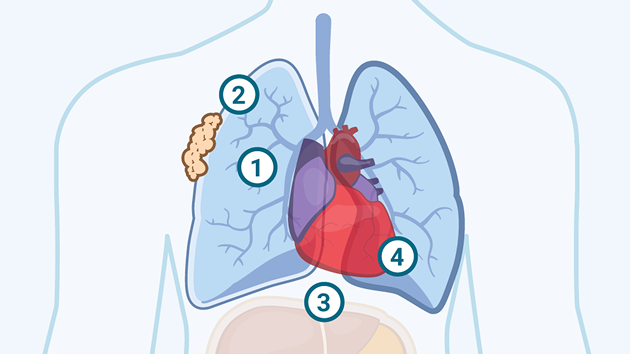
Surgeons resect four body parts during EPP:
They also may remove lymph nodes.

EPP stems from pneumonectomy surgery, which is used for various types of diseases. Dr. Evarts Graham performed the first pneumonectomy on April 5, 1933, at Barnes Hospital in St. Louis, Missouri. The patient had carcinoma of the lung, not mesothelioma.
The first EPP was performed in 1949 to treat tuberculosis. In the latter half of the 20th century, the surgery was used almost exclusively for malignant mesothelioma.
In the 1970s, Dr. Eric Butchart and others published the oldest-known study on survival and mortality rates for extrapleural pneumonectomy. Around the same time, he created the first staging system for mesothelioma.
A pneumonectomy is surgically removing part or all of your lung. For pleural mesothelioma, this procedure removes the lung on the same side as the tumors. These tumors form in the pleural space and spread to the lungs.
By removing the lung, surgeons also remove the visceral pleura. This cell lining is attached to the lung.
Extrapleural is a medical term for the tissue outside of the parietal pleura. The parietal pleura is the outer lining of the pleura attached to the chest wall.
The “extrapleural” part of EPP is removing the:
Pleural mesothelioma forms in the pleura, which is a thin layer of mesothelial tissue. The lining offers a buffer for the lungs to expand and contract against the chest wall.
The pleura is made up of two mesothelial cell linings: the parietal pleura and visceral pleura. The parietal pleura is the outer lining, meaning it’s attached to the chest wall. It is also near the diaphragm and pericardium. The visceral pleura is the inner lining, on the lung.

EPP was the first surgery designed for mesothelioma. Pleurectomy with decortication (P/D) is a newer technique, and both surgeries are what doctors use to treat pleural mesothelioma.

The main contrast between EPP and P/D is the removal of the lung. EPP removes the lung while P/D does not.
The lungs are vital to the respiratory system working properly. Removing one lung is a consequential decision, so patient selection is crucial.
Doctors usually evaluate overall health, medical history and age before performing this surgery.

Multimodal treatment is a combination of different therapies to fight cancer in multiple ways. Surgery, chemotherapy and radiation as a trio is the most common type of multimodal therapy for mesothelioma.
EPP works best with intravenous chemotherapy and external beam radiation. For decades, doctors used these methods of treatment after surgery to kill any remaining cancer cells.
In recent years, doctors have tested radiation before EPP. This is called “SMART” (surgery for mesothelioma after radiation therapy), and it has improved life expectancies for many patients after EPP surgery.
Doctors may also use intraoperative therapies with EPP. These therapies occur during the surgery and can decrease chances of recurrence.
The two intraoperative therapies combined with EPP are:
Prior to incision, the patient is sedated with anesthesia, intubated (breathing tube placed), and properly positioned.
According to the MedStar Washington Hospital Center website, EPP surgery takes at least three hours to complete:
The surgeon makes a thoracotomy incision, approximately 9-10 inches long, along the side of the patient’s body. The surgeon may remove the sixth rib to better access the lung cavity.
The surgical team inspects the chest cavity for visible tumors.
The surgeon removes the diseased lung from the body. The surgeon also removes the visceral pleura attached to the lung.
The surgeon looks for visible tumors within the chest cavity to be resected. They’ll also remove the parietal pleura and either part or all of the diaphragm and pericardium.
If mesothelioma has spread to the lymph nodes in the chest, doctors may remove them.
Doctors may apply intraoperative chemotherapy or intraoperative radiation therapy.
Doctors may use Gore Tex or another material to reconstruct the removed parts.
Doctors examine the cavity for any potential complications from the surgery. They insert a chest tube to help with breathing by draining fluid from where the lung was removed.
Recovery from mesothelioma EPP takes around two months: two weeks in the hospital and 6-8 weeks at home. Patients may experience respiratory challenges for long after surgery.

Following surgery, patients go to the intensive care unit (ICU) for the initial phase of inpatient recovery. Patients are transferred out of ICU a few days later. According to the University of California San Francisco Department of Surgery website, inpatient recovery after EPP is around two weeks.

Outpatient recovery can occur at the patient’s home, a rehabilitation facility or a long-term care facility (nursing home or assisted living center). Patients usually need 6-8 weeks of outpatient recovery after EPP.
Doctors look for specific factors as a guideline for who is eligible for this surgery. These criteria include: stage of the cancer; overall health; and cell type.
Anyone told they can’t undergo surgery should look into a second opinion. General cancer surgeons or thoracic oncologists might not have experience performing EPP for mesothelioma. We recommend finding a specialist to discuss options.

Stage is important for determining who should get EPP for mesothelioma. Some doctors feel a stage 2 or stage 3 diagnosis is best treated with this operation, while stage 1 or early stage 2 is better for P/D surgery.
The reasoning is stage 3 mesothelioma likely has invaded the lung. In earlier stages, tumors haven’t yet reached the lung and the organ can remain in the body.
On the other hand, some doctors recommend P/D even for higher stages of mesothelioma. This is dependent on the experience of the institution and surgeon.

Physical health is essential to determining if a patient should undergo EPP surgery. The patient’s respiratory function and health should determine if they can endure a lung resection.
Doctors have patients go through a preoperative patient evaluation. These tests help doctors analyze whether this aggressive surgery is the best option.

Cell type is a significant factor for whether EPP is the best treatment option. Epithelioid mesothelioma is the easiest cell type to treat because the tumors don’t spread as quickly.
Sarcomatoid mesothelioma is the toughest to treat and has high rates of recurrence. Many doctors won’t recommend EPP for this cell type. Biphasic mesothelioma, a mixture of epithelioid and sarcomatoid cells, is determined on a case-by-case basis.
Survival rates have steadily improved for extrapleural pneumonectomy. A study in the Journal of Thoracic Oncology reported an average survival after mesothelioma EPP of 18.4 months. Most patients in the study had a stage 3 diagnosis.
Doctors usually pair EPP with one or multiple other therapies. Chemotherapy and radiation are the safest options with the most data for reference.
Multimodal treatment refers to using multiple treatments for a disease. Surgery is the primary option, while chemotherapy and radiation are secondary methods.
Doctors may use chemotherapy or radiation before or after EPP surgery. Using them after is “adjuvant therapy” and using them before is “neoadjuvant therapy.”

EPP w/ Neoadjuvant and Adjuvant Therapies
Has an 18 month median survival.

EPP w/ Adjuvant Chemo & Radiation
Has an 18 month median survival.

EPP w/ Adjuvant Radiation Therapy
Has an 14.7 month median survival.
SMART for mesothelioma is a new protocol using radiation therapy before surgery. The concept originated at Princess Margaret Cancer Centre in Toronto, Canada.
Doctors began SMART with EPP as the preferred surgery. They used radiation to control and shrink tumors days before the operation.

Initial studies showed 3-year survival rates of 72%. Epithelioid patients saw the best results: median survival of 65 months.
“I went back to double-check the numbers because I couldn’t believe it at first. I thought we made a mistake.”
John Cho
Mesothelioma Specialist at Toronto Hospital
Doctors found success using intraoperative chemotherapy with peritoneal mesothelioma surgery. The results led experts to consider intraoperative therapies for pleural mesothelioma.
The two options are heated intraoperative chemotherapy and intraoperative radiation therapy.
Surgical removal of a vital organ is a serious medical decision. Since EPP surgery removes the affected lung, patients may experience breathing issues for months or years. EPP can affect quality of life, and the patient’s overall health is a key element to selection.
Recurrence is the return of cancer after a specified amount of time with no sign of cancerous activity. Mesothelioma has high recurrence rates due to the disease’s characteristics.
Mesothelioma consists of small microscopic tumors that spread like an avalanche from the mesothelial lining to other nearby areas. The intent of mesothelioma EPP is to remove all tumors. However, even after resecting the lung, some standalone tumors may be hidden within the chest cavity.

Using EPP with SMART led to a 63% recurrence rate within five years of the surgery. Dr. Raja Flores, a highly respected surgeon, reported a 57% recurrence rate after EPP. This data was published in 2020.
One of the concerns with EPP is the surgery’s mortality (death) rate. It’s a reason doctors prefer lung-sparing surgery over lung resection.
In two studies, one reported in 2013 and the other in 2014, the 30-day mortality rates were 11% and 12%. A study in 2016 reported a lower mortality rate (7%), but it was still triple that of P/D surgery.
Surgery is a major decision for people with pleural mesothelioma, and it is important to get the best information possible before choosing a treatment plan. Treatment recommendations may vary depending on the patient and the specialist.
The following pleural mesothelioma experts have significant experience and knowledge in treating this rare disease and can help patients understand their surgical and other treatment options:

An extrapleural pneumonectomy involves removing your lung, pleura (thin lining covering your lungs), diaphragm, pericardium (thin lining encompassing your heart) and diseased lymph nodes. A pneumonectomy is a surgical procedure to remove a lung, but mesothelioma often spreads to other areas needing to be removed as well.
In one study, more than 60% of mesothelioma patients survived for one year after an extrapleural pneumonectomy. Around one‑fourth survived for three years. The extreme nature of removing your lung, diaphragm, lymph nodes and pleura decreases the likelihood of a recurrence.
Lung resection is a challenge for patients, especially those in older age or poor health. Not all patients enjoy a good quality of life with just one lung. They may experience breathing issues, pneumonia or other pulmonary complications. Other risks of having an extrapleural pneumonectomy include:
Extrapleural pneumonectomy for mesothelioma lasts approximately three hours. There is little variance in the time the surgery takes, as most doctors remove the same organs and body areas.
Patients usually stay in the hospital for two weeks after an extrapleural pneumonectomy. Recovery continues for 6‑8 weeks at home. The overall recovery time from mesothelioma EPP is two months, but some patients may need physical therapy to rehab their respiratory system.
An extrapleural pneumonectomy for mesothelioma costs a median of $62,400, according to a report in Rare Tumors. The range is $48,000‑$76,000. Health insurance often covers most of the costs after the plan’s deductible.


