Have a medical question?
- Learn about your treatment options
- Ask questions about your diagnosis
- Get doctor recommendations


Written By: Karen Ritter, RN BSN
Mesothelioma multimodal therapy is a combination approach to the treatment of mesothelioma. Doctors use multiple therapies to improve life expectancy for mesothelioma patients. Surgery, chemotherapy and radiation are often featured in mesothelioma multimodal therapy.

Mesothelioma Thoracic Surgeon
Dr. Khalil is a mesothelioma thoracic surgeon at Brigham and Women's Hospital and Dana-Farber Cancer Institute in Boston, Massachusetts. Dr. Khalil has been a medical reviewer for Mesothelioma Guide since 2021. He prioritizes ensuring the accuracy, relevancy and completeness of all medical information published on this website. Learn more about Dr. Hassan Khalil
Mesothelioma multimodal therapy is a comprehensive approach that combines different treatment methods to improve outcomes for patients diagnosed with this challenging cancer. Since mesothelioma often resists single therapies, combining treatments such as surgery, chemotherapy, radiation, and emerging options like immunotherapy aims to attack the disease from multiple angles, increasing the chance of controlling or reducing tumor growth. This approach is designed to help patients live longer and with a better quality of life by reducing the risk of tumor resistance and spread.
To access multimodal therapy, the first step is obtaining an accurate diagnosis from experienced medical professionals. Once diagnosed, patients can work with specialized cancer care teams and patient advocates to identify the best treatment centers that offer multi-treatment options. These centers often develop personalized treatment plans based on the patient’s overall health, tumor location, and disease stage, which may include surgery followed by chemotherapy and radiation, or vice versa. Some emerging therapies, like immunotherapy, tumor treating fields, and intraoperative treatments, are increasingly integrated into multimodal plans as research advances.
The rationale behind multimodal therapy is that combining multiple treatment modalities can produce a synergistic effect, meaning each therapy enhances the effectiveness of the others. For example, immunotherapy can make the immune system stronger in fighting cancer, while chemotherapy weakens tumors and makes them more vulnerable. Radiation helps destroy cancer cells’ DNA, prompting immune responses. When these treatments are used together, they can work more effectively than alone, slowing or stopping cancer growth for longer periods. While some components like surgery and radiation remain experimental or are under clinical trial evaluation, their combination with FDA-approved options like certain chemotherapies and immunotherapies is showing promising results.
Many top cancer treatment centers in the country now offer multimodal therapy tailored to each patient’s needs. Such centers employ advanced surgical techniques, like pleurectomy with decortication or extrapleural pneumonectomy, often combined with treatments like hyperthermic intraoperative chemotherapy. They may also incorporate cutting-edge therapies such as gene therapy, virotherapy, or photodynamic treatments, which are still under investigation but hold potential for the future. Navigating these complex options can be overwhelming, but dedicated teams at specialized centers work carefully to create the most effective treatment plans. Patients and their families should seek out experienced providers and advocate for access to these advanced, combined therapies to optimize their chances of managing mesothelioma effectively.
Follow these three steps if you’re wondering how to get multimodal treatment for mesothelioma:

Get diagnosed with mesothelioma. Visit a medical institution to receive an official diagnosis from an expert. This is a requirement before starting multimodal therapy.


Contact a patient advocate to find treatment. You may live close to a top cancer center, or you may qualify for financial help traveling out of state to a hospital. Patient advocates help with this step.

Ask a mesothelioma doctor about multimodal treatment options. You may be eligible for surgery, followed or preceded by chemotherapy and radiotherapy. Another option is immunotherapy and chemotherapy. It’s easier to access these therapies through a cancer center.
Mesothelioma is stubborn and is resistant to most single therapies (called “monotherapy”). Tumors often continue growing and spreading despite initial effectiveness from chemotherapy drugs, immunotherapy drugs or radiation beams.
Multimodal therapy attacks mesothelioma tumors in multiple ways. This approach reduces the chances of tumors becoming resistant to a single therapy.
Two treatments working in tandem can make each individual therapy stronger. This is called a synergistic effect. For example:

Immunotherapy makes the immune system a stronger ally for other therapies fighting mesothelioma

Chemotherapy weakens tumors, helping the immune system

Radiation breaks up the DNA of mesothelioma cells, which can inspire a response from the immune system

Multimodal therapy for mesothelioma usually includes a combination of these five:
Specific types of chemotherapy, immunotherapy and tumor treating fields are FDA-approved therapies for malignant pleural mesothelioma. Surgery and radiation are not FDA-approved and still considered experimental, although surgery provides the best survival rates for select patients.
Other multimodal therapy options are tested in clinical trials. They include:
Surgery is the first option considered for any mesothelioma case. While many patients have metastasis or are not healthy enough for surgery, this option is associated with the best survival times.
Doctors prefer to build multimodal treatment plans around mesothelioma surgery. The first multimodal therapy approach was combining surgery with chemotherapy and radiation.
Some clinical studies use immunotherapy before or after surgery. While immunotherapy drugs Opdivo and Yervoy are approved for malignant pleural mesothelioma, they’re only allowed for non-surgical cases. Their use as multimodal therapies with surgery is in the experimental phase.
Mesothelioma neoadjuvant treatment is therapy used before surgery. Patients can receive chemotherapy, radiation or immunotherapy (in clinical trials) before an aggressive mesothelioma surgery. The purpose is to shrink tumor volume and help surgeons remove the disease easier.
Mesothelioma adjuvant treatment is therapy used after surgery. Patients receive chemotherapy, radiation and immunotherapy (in clinical trials) after an aggressive surgery. The purpose is to treat any remaining tumors not taken out during the operation.
Systemic chemotherapy works both before and after surgery, especially for pleural mesothelioma. Systemic chemotherapy is delivered intravenously into the bloodstream. The FDA approved intravenous cisplatin and pemetrexed for malignant pleural mesothelioma.
P/D survival can reach an average of 32 months when paired with chemotherapy. This length occurred from a study at Memorial Sloan Kettering Cancer Center.
SMART (surgery for mesothelioma after radiation therapy) led to a median survival of 24.4 months. The method started in Toronto, Canada, and is featured at multiple U.S. cancer centers. SMART usually relies on EPP as the surgery.
Two trials used P/D followed by radiation therapy:
The most well-known intraoperative therapy for mesothelioma is hyperthermic intraoperative chemotherapy (HIOC). There are two forms used for mesothelioma:
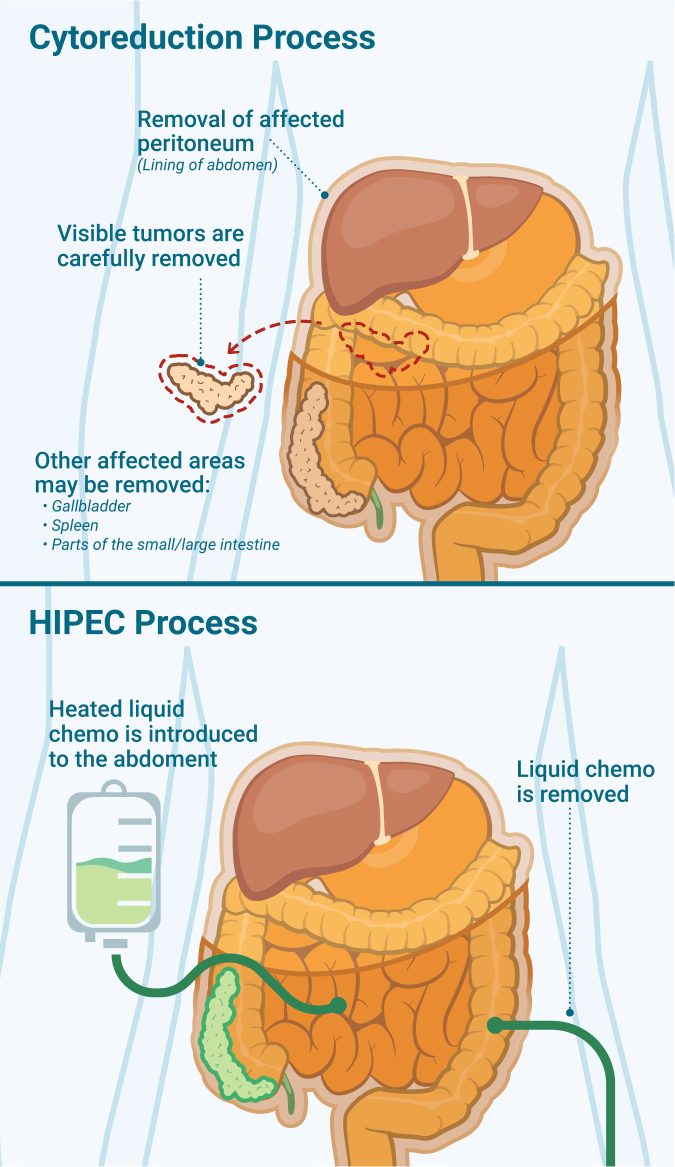
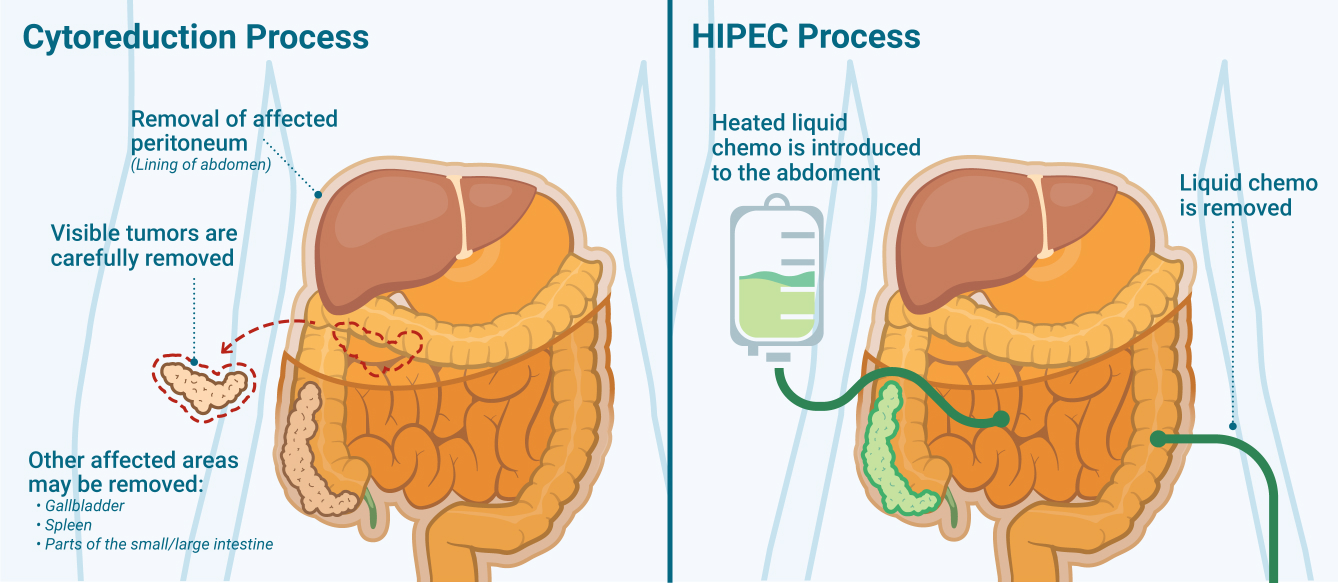
Cytoreduction/HIPEC Process
Example of Intraoperative Therapy (Cytoreduction with HIPEC)
HIOC sends hot liquid chemotherapy drugs into the abdomen or chest. Specialists deliver the drugs through ports or the surgical incision. This occurs the same day as surgery after the main resection is completed.
HIPEC is paired with cytoreduction for peritoneal mesothelioma. A study conducted at Wake Forest Baptist Cancer Center reported a median survival of 40 months and one-year survival rate of 77%. Another study surpassed a median survival of five years.
HITHOC with P/D or EPP was impressive in multiple studies:
Mesothelioma immunotherapy helps the body fight cancer naturally. Some immunotherapy drugs are approved officially for malignant mesothelioma. Others are still in testing.
The FDA approved Opdivo and Yervoy for unresectable malignant pleural mesothelioma in October 2020. These two drugs are immune checkpoint inhibitors. They “take the breaks off” the immune system, as specialist Dr. Daniel Sterman explained, and help the body’s T cells fight mesothelioma effectively.
Another study paired ramucirumab with chemotherapy. The median survival was 14 months, and more than half reached the 1-year mark.
A study at Johns Hopkins Hospital in Baltimore, Maryland, gives patients Opdivo and Yervoy 6 weeks before surgery. This study is a groundbreaking example of pairing immunotherapy with aggressive pleural mesothelioma surgery.
Other mesothelioma therapies include:
These therapies are often paired with some of the main options — surgery, chemotherapy, radiation or immunotherapy — in clinical studies. In some trials, these emerging options are paired together.

One tumor treating fields device is FDA-approved to treat malignant pleural mesothelioma. It’s approved for unresectable cases and must be used with chemotherapy. The device, Optune Lua, sends electric waves through the patient’s body.
Optune Lua has a median survival of 18.4 months, which outperforms chemotherapy alone.

Gene therapy is still in the infant stages of investigation for mesothelioma. The theory is to alter the genetics of cancerous cells, causing them to die, or repair the cells to health status.
Some trials use gene therapy with virotherapy or chemotherapy.

Virotherapy, or oncolytic virus therapy, delivers a programmed virus to attack mesothelioma cells or induce an immune response — or both.
An example is ONCOS-102, a multimodal therapy despite being just one drug. It applies elements of virotherapy and immunotherapy. ONCOS-102 is an oncolytic adenovirus that breaks up mesothelioma cells and signals for the immune system’s help.
ONCOS-102 is close to FDA approval after median survival of 20-21 months. The manufacturer, Novocure, is planning a pairing of ONCOS-102 and immune checkpoint inhibitors, creating a new multimodal therapy approach.

Photodynamic therapy (PDT) sends a special drug, called a photosensitizer, into the patient. The drug attaches to mesothelioma cells.
These drugs are sensitive to light, and doctors aim a laser light at the location of the cancer. This causes the drug to react and kill the cancer cells.
Dr. Joseph Freidberg at the Temple University Health System paired PDT with P/D surgery. The median survival was 31.7 months.
PDT is still an experimental treatment. It can be used with surgery and chemotherapy.
The top Mesothelioma Centers of Excellence offer some form of multimodal treatment. Each cancer center may have a unique tweak to some of the combinations.
For instance, Michigan Medicine is the first U.S. cancer center to implement the SMART approach of radiotherapy before surgery. Wake Forest Baptist Cancer Center in North Carolina is one of the premier institutions for cytoreduction and HIPEC to treat peritoneal mesothelioma.
Other cancer centers offer clinical trials testing new multimodal approaches. A few other top mesothelioma hospitals are:
Many community hospitals don’t offer multimodal therapy for a rare cancer like mesothelioma. They’ll likely offer just one therapy, such as chemotherapy or radiation, but don’t have experienced surgeons for aggressive operations. Going to a community hospital may hinder your potential for long-term survival.
We can help you find multimodal treatment for mesothelioma. Our patient advocates will connect you with a top cancer center within a reasonable travel distance from your location.
If you need to travel a considerable distance, we can help you get financial assistance to pay for it. You shouldn’t face barriers to getting life-saving multimodal treatment, and our staff can help you overcome any obstacles.

Multimodal therapy is a combination of mesothelioma treatment options. Mesothelioma multimodal therapy involves a combination of:
Top mesothelioma cancer centers use surgery, chemotherapy and radiation as the multimodal approach. More specialists are adjusting the order of these three therapies, sometimes using surgery first and other times using radiation first.
Mesothelioma tumors are stubborn and able to resist single therapies. Using multiple treatments attacks the diseased cells in multiple ways, which reduces the chances of resistance. This stalls the cancer’s spread for a longer time, which helps the patient’s survival.