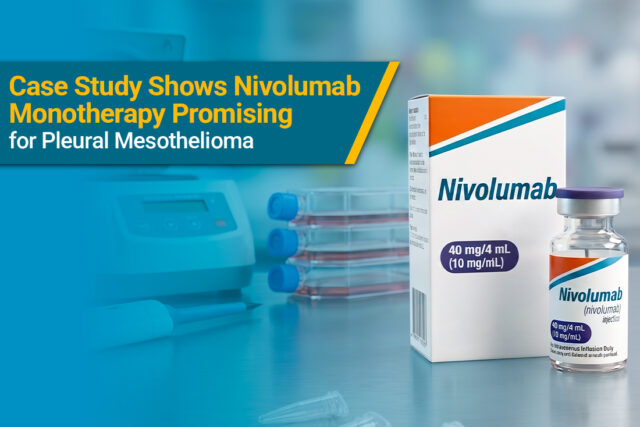
Researchers from the Hakodate National Hospital in Japan published a case study in the treatment of the rare and aggressive cancer called mesothelioma that could indicate an important and positive step in the treatment of the disease.
Their patient, a 72-year-old man with pleural mesothelioma who had previously received surgery and chemotherapy, was placed on a regimen of the immunotherapy drug nivolumab after his cancer continued to progress.
Two years after starting immunotherapy, the patient’s disease progression had been halted without any adverse health effects. It’s an exciting result with serious potential implications.
What Is Nivolumab?
Nivolumab, also known by the brand name Opdivo, is a type of mesothelioma immunotherapy called an immune checkpoint inhibitor. Opdivo is approved for use in the treatment of a number of different forms of cancer, including mesothelioma.
Immune checkpoint inhibitors block specific proteins on cancer cells from connecting with proteins on immune system cells, which leaves the cancer cells exposed and vulnerable to attack from the body’s immune system.
The landmark Checkmate-743 study, which was published in 2021, indicated that nivolumab used in combination with fellow immune checkpoint inhibitor ipilimumab – also known by the brand name Yervoy – led to an increase in survival rates for patients with unresectable pleural mesothelioma compared to patients who received chemotherapy. The U.S. Food and Drug Administration (FDA) approved Opdivo and Yervoy for people diagnosed with pleural mesothelioma not long after.
How Does Nivolumab Treat Mesothelioma?
Ever since the publication of Checkmate-743, nivolumab and ipilimumab have been used as a first-line treatment for pleural mesothelioma when surgery is not an option for patients. Pleural mesothelioma is a type of mesothelioma found in the lining of the lungs and is the most common form of the disease.
Nivolumab on its own has also been commonly used as a second-line treatment for pleural mesothelioma, in cases when the first-line treatment was unsuccessful and the mesothelioma relapsed. However, nivolumab monotherapy in these cases has not produced durable results, and its use in combination therapy has been associated with adverse health effects.
That’s why this case study could be so important: It provides hope that nivolumab monotherapy could produce a positive long-term outcome for some patients without adverse effects.
What Could This Case Mean For Mesothelioma Treatment?
Even despite recent advances in treatment, malignant pleural mesothelioma has been associated with poor health outcomes. These results open up the exciting possibility that a nivolumab monotherapy could produce long-term progression-free survival even after patients relapse following surgery. Further research will have to be performed into what specific factors may have led to this patient’s durable, positive response.
Regardless, these results are a positive step, and further affirm nivolumab’s viability as a monotherapy for pleural mesothelioma.
Sources & Author
- Long-Term Disease Control With Second-Line Nivolumab Monotherapy in Malignant Pleural Mesothelioma: A Case Report. Cureus. Retrieved from: https://www.cureus.com/articles/425286-long-term-disease-control-with-second-line-nivolumab-monotherapy-in-malignant-pleural-mesothelioma-a-case-report#!/. Accessed: 06/10/2026.