During the 20th century, plenty of buildings were made with asbestos in walls, floor tiles, insulation, and more. Today, many of these buildings may contain asbestos if they have not been fully renovated, and this can lead to businesses closing.
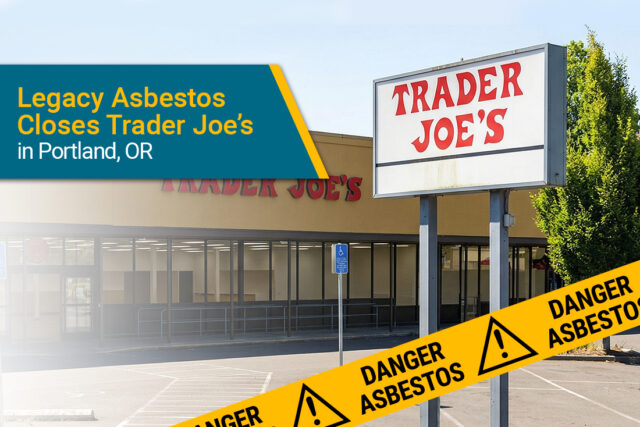
In Portland, OR, this exact issue occurred in a Trader Joe’s grocery store.
A Trader Joe’s in the southeast region of the city closed weeks ago and reopened this week. An after-hours renovation project potentially exposed workers and customers to asbestos lurking in the store.
Asbestos can cause a rare type of cancer called mesothelioma. The mineral can also cause lung cancer and ovarian cancer.
Finding Asbestos in Portland Trader Joe’s
The issue emerged when a worker complained of “black dust”, according to a report in Oregon Live. This paused the renovation project, which started in February, and the store closed in early March. Oregon’s Department of Environmental Quality tested the air and substance, which revealed asbestos.
Asbestos was found in exposed flooring, which used black mastic, according to the Oregon Live report. This is an old asphalt-based adhesive commonly used to glue floor tiles. Asbestos was often added to black mastic to improve durability.
Fox 12 Oregon reported videos of customers walking over the flooring with exposed black adhesive before the store closed.
Trader Joe’s hired an asbestos abatement company to get rid of the dangerous substance. These companies are trained to either remove or seal exposed asbestos to protect workers and customers.
As of January 2026, Trader Joe’s has 631 stores in the United States. The business is known as a “specialty grocery chain” known for unique, high-quality products from alternative brands.
Legacy Asbestos in Buildings Today
Asbestos found in buildings erected during the 20th century is called legacy asbestos. Exposure to legacy asbestos can lead to mesothelioma and any other asbestos disease. Now that the most common type of asbestos is banned in the United States, legacy asbestos exposure is going to increase as a cause of mesothelioma.
Asbestos was often used in:
- Roof shingles
- Wallboards
- Siding
- Sheetrock
- Ceiling and floor tiles
- Acoustical plasters
- Drywall joint compounds
- Cement in pipes
- Boilers and water heaters
- Steel beams and columns in multistory buildings
People may also find legacy asbestos in old appliances in their home or office, such as toaster ovens.
People working in grocery stores and other businesses should be wary of potential asbestos. A concerning issue during the 20th century is the amount of asbestos found in schools across the United States. The city of Philadelphia has closed at least a dozen schools in the past decade due to asbestos.
Many schools have not been renovated due to limited funding, and school buildings constructed during the 1980s or earlier likely have asbestos lingering in ceilings and walls.
If you find legacy asbestos in your home, office or anywhere else, contact an asbestos removal specialist. Do not try to remove legacy asbestos, as this can release sharp fibers into the air and cause health risks for yourself and others.
Sources & Author
- SE Portland Trader Joe’s reopens after asbestos exposure. Oregon Live. Retrieved from: https://www.oregonlive.com/retail/2026/04/se-portland-trader-joes-reopens-after-asbestos-exposure.html. Accessed: 04/06/2026.
- Trader Joe’s to reopen in SE Portland after temporary closure due to asbestos. Fox 12 Oregon. Retrieved from: https://www.kptv.com/2026/04/06/trader-joes-reopen-se-portland-after-temporary-closure-due-asbestos/. Accessed: 04/06/2026.