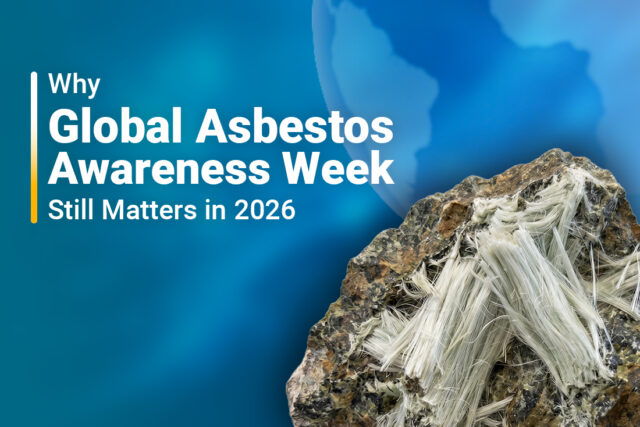
Last week, the mesothelioma community observed the Global Asbestos Awareness Week: a chance to raise awareness about the ongoing dangers of asbestos exposure and the devastating diseases it causes, including mesothelioma.
While many people think of asbestos exposure as a problem of the past, the reality is there is still a real threat today.
Despite decades of research and evidence confirming the dangers of asbestos, it is still not fully banned in the United States. Chrysotile asbestos is banned, but this is only one of six types. The other five are still legal.
Asbestos can still be found in:
- Older homes and buildings
- Schools and public facilities
- Industrial and construction materials
When materials containing asbestos are deteriorating, damaged, or being disturbed – during renovations, repairs, or demolition – microscopic asbestos fibers can become airborne and unknowingly inhaled. This continues to be a problem today due to the presence of old asbestos in buildings and the use of asbestos in the aftermarket automobile industry.
Impact on Public Health
Each year, nearly 3,000 Americans are diagnosed with asbestos-related diseases, including mesothelioma. Diagnosing mesothelioma is a challenge, mainly because of its long latency period (time from exposure to onset of symptoms):
- Symptoms may not appear for 20-50 years after exposure.
- Many patients are unaware they were ever exposed.
- Symptoms are often vague and commonly associated with other illnesses.
This delay often leads to late-stage diagnosis, limited treatment options, and impact on overall outcomes.
Exposure Not Always Occupational
Historically, asbestos exposure has been commonly linked to industrial jobs: construction, shipbuilding, and manufacturing. This is called occupational asbestos exposure. While this is still true, awareness efforts are now highlighting other forms of exposure:
- Secondary asbestos exposure (take-home exposure) – Asbestos dust/fibers brought home on skin or clothing
- Environmental asbestos exposure – Living near contaminated sites or in buildings with deteriorating structures
- Consumer-related (talc asbestos exposure) – Exposure through legacy products (for example: brake pads, popcorn ceilings, drywall, etc.)
Having a broader understanding about possible exposure is crucial for earlier recognition, early diagnosis and early treatment.
Improving Awareness of Asbestos Exposure
Global Asbestos Awareness Week plays an essential role in spreading the word about the dangers of asbestos, asbestos-related diseases, and asbestos products and materials. It is important to educate the public about the continued risks of asbestos exposure and encourage people to take it seriously.
Many people still do not realize asbestos is present in their environment or understand how easily exposure can occur.
Increased awareness can lead to:
- Earlier conversations with healthcare providers
- Faster referrals to specialists
- Earlier diagnoses
Awareness efforts can support:
- Policy changes
- Safer regulations
- Continued push toward a full asbestos ban
Important steps forward:
- Increased regulation of asbestos use
- Improved workplace protections
- Advances in mesothelioma treatment
However, the continued presence of asbestos in buildings and materials means the risk is far from eliminated.
What You Should Know
If you or a loved one has a history of possible asbestos exposure – even decades ago – it is important to:
- Share the possible exposure history with your physician
- Be aware of symptoms like persistent cough, chest pain, or shortness of breath
- Seek evaluation from specialists if concerns arise
Early awareness of new or worsening medical conditions is critical. Do not wait. See your physician to get a comprehensive medical evaluation, as this can make a meaningful difference in care and outcomes.
Call to Action
Global Asbestos Awareness Week is more than just a time to reflect and recognize the impact asbestos has had. It is also a call to action.
For patients, families, physicians, and advocates, this means:
- Staying informed
- Asking questions
- Seeking expert care
- Supporting continued awareness and advocacy
- Promoting continued policy changes
Mesothelioma and other asbestos-related diseases are largely preventable. Yet, they continue to affect thousands of families each year.
Awareness is one of the most powerful tools we have – not only to protect future generations, but to ensure that those already impacted receive the care, treatment, and support they deserve.
Sources & Author