


Everything You Need to Know About Peritoneal Mesothelioma
Have a medical question?
- Learn about your treatment options
- Ask questions about your diagnosis
- Get doctor recommendations


Written By: Karen Ritter, RN BSN
Peritoneal mesothelioma is a type of mesothelioma that forms in the lining of the abdominal cavity. It is an aggressive cancer caused by exposure to asbestos. Treatment options include surgery and chemotherapy.

Surgical Oncologist
Dr. Eugene Choi is a surgical oncologist with Baylor St. Luke’s Medical Center. He sees people with peritoneal malignancies, such as peritoneal mesothelioma. Most of his work is done with veterans at the Michael E. DeBakey VA Medical Center in Houston, Texas. Learn more about Dr. Eugene Choi
Peritoneal mesothelioma is a rare form of cancer that develops in the lining of the abdominal cavity, known as the peritoneum. This disease is primarily caused by exposure to asbestos, a mineral that can become lodged in the lining after inhalation or ingestion. Though it is a rare cancer, accounting for about 15-20% of all mesothelioma cases, it can be aggressive. Most individuals diagnosed are around 61 years old, with a slightly higher prevalence among men, often due to occupational exposure. Understanding the nature of this disease is important for early detection and effective treatment, which can improve outcomes and quality of life.
Symptoms of peritoneal mesothelioma often include abdominal pain, swelling, and fluid buildup in the abdomen, known as ascites. Additional signs can include nausea, unexplained weight loss, loss of appetite, fatigue, and changes in bowel habits like constipation. Because these symptoms may only appear once the disease has advanced, timely medical assessment is crucial. Diagnosis usually involves imaging tests such as CT scans or MRIs, followed by a tissue biopsy to confirm the presence of cancer. Early detection can significantly impact prognosis and survival rates, emphasizing the importance of awareness and prompt medical attention when symptoms arise.
The primary treatments for peritoneal mesothelioma include surgery and chemotherapy. The most common surgical approach is cytoreductive surgery combined with heated intraperitoneal chemotherapy (HIPEC), a technique that removes visible tumors and administers heated chemotherapy directly into the abdomen to target remaining cancer cells. When surgery isn't feasible, chemotherapy delivered through the bloodstream may be used, often involving drugs like pemetrexed and cisplatin. Emerging therapies, such as immunotherapy, are also being studied and offer hope for improved outcomes. Additionally, supportive and palliative care options focus on managing symptoms and enhancing the patient's quality of life throughout treatment. Finding experienced healthcare providers and specialized cancer centers can significantly influence treatment success and survivability for those diagnosed with this disease.
Malignant peritoneal mesothelioma is a cancerous type of mesothelioma that forms in the lining of the abdominal cavity. This lining is called the peritoneum. It protects the abdominal cavity and the many organs within it.
Peritoneal mesothelioma is one of four types of mesothelioma, which is a rare cancer caused by exposure to asbestos. Approximately 2,500 people in the United States each year are diagnosed with mesothelioma, and peritoneal mesothelioma accounts for an estimated 15% of them.
The average age of people diagnosed is 61 years old, and 53% of people with the cancer are male.
Treatment for peritoneal mesothelioma includes surgery and chemotherapy. The treatment plan is tailored to each individual based on factors such as cancer stage and overall health.
The first treatment option considered is cytoreduction surgery with heated intraperitoneal chemotherapy (HIPEC). If surgery is not possible, then patients can receive standard chemotherapy (through an IV). There are additional treatment options – such as immunotherapy or gene therapy – available through clinical trials.

The main surgery for peritoneal mesothelioma is cytoreductive surgery with heated intraperitoneal chemotherapy (HIPEC). Doctors may refer to it as HIPEC surgery. The surgery involves the removal of tumors from the abdomen and the use of a heated chemotherapy solution.
According to the National Cancer Database, approximately half of people with peritoneal mesothelioma undergo surgery.
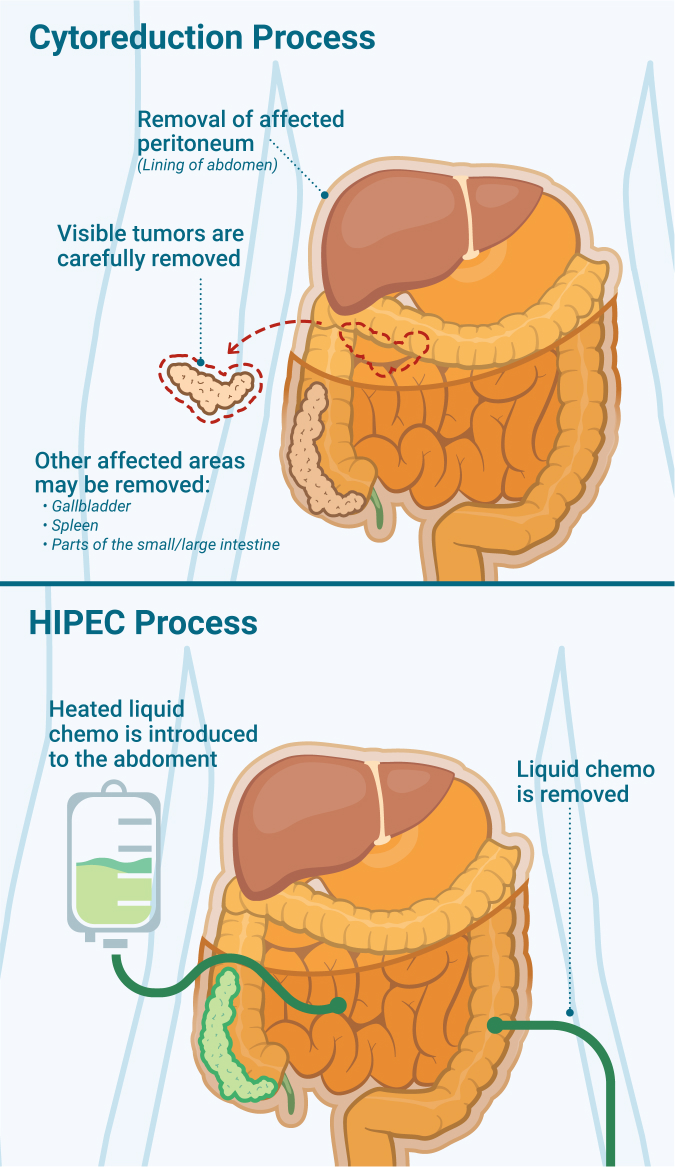
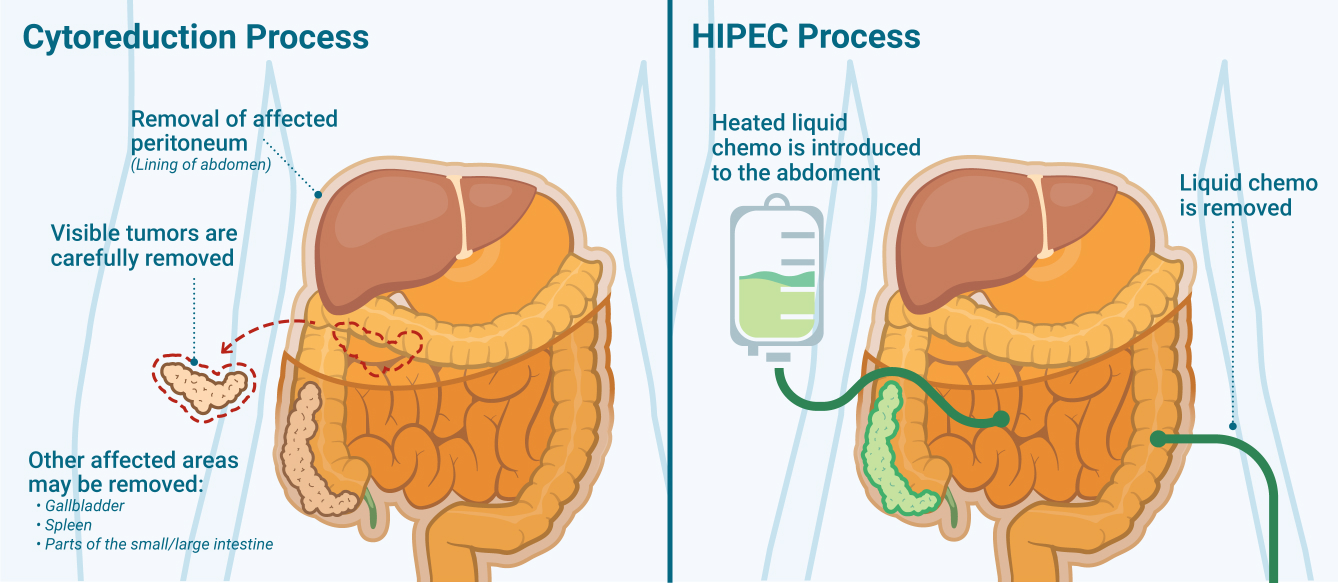
Cytoreduction/HIPEC Process

Cytoreduction/HIPEC surgery is an extensive cancer surgery. It often lasts up to 12 hours, and recovery lasts up to two months.
Cytoreductive surgery involves “debulking”, which is the medical term for removing all visible tumors and diseased tissue. Doctors also remove the omentum, which is a non-vital layer of fatty tissue in the abdominal cavity, and may remove the peritoneum, spleen or other non-vital organs if they show evidence of tumors.
Cytoreductive surgery is combined with heated chemotherapy to destroy microscopic cancer cells still present after debulking. This method is called heated intraperitoneal chemotherapy, or HIPEC. The combination of heat and chemotherapy can kill tumor cells.
The heated chemotherapy is delivered directly into the abdominal cavity, which allows for higher doses. Delivering the chemotherapy this way rather than through the bloodstream can avoid some common side effects of traditional chemotherapy.

Chemotherapy for peritoneal mesothelioma is a common treatment option. Chemotherapy can be used before or after cytoreduction surgery with HIPEC. It can also be used for patients who will not receive HIPEC surgery.
Approximately two-thirds (67%) of people with peritoneal mesothelioma receive chemotherapy. This is according to the National Cancer Database.
Chemotherapy for peritoneal mesothelioma is delivered into the patient’s bloodstream or directly into the abdominal cavity during surgery.
Patients usually receive a combination of pemetrexed and cisplatin, which are the chemotherapy drugs approved by the U.S. Food and Drug Administration for peritoneal mesothelioma. Other chemotherapy drugs are available for individual cases.

Immunotherapy for peritoneal mesothelioma is an emerging treatment option for patients. Doctors are testing immunotherapies in clinical trials. Using immunotherapy as a peritoneal mesothelioma treatment represents a significant advancement in personalized cancer care.
The type of immunotherapy showing the most promise is immune checkpoint inhibitors. Examples are pembrolizumab (Keytruda), nivolumab (Opdivo), ipilimumab (Yervoy) and durvalumab (Imfinzi). These therapies help the immune system look for and fight cancer cells.

Palliative care for peritoneal mesothelioma is a treatment approach focusing on quality of life. Palliative care for mesothelioma manages symptoms and side effects to make patients more comfortable. This should be a priority for patients with all stages of cancer and throughout the treatment process.
Palliative care for peritoneal mesothelioma may include a procedure (paracentesis) to drain fluid from the peritoneum. As fluid builds in the lining of the abdomen, patients experience pain, discomfort and abdominal distention. Paracentesis can relieve this discomfort.
Other examples of palliative care for peritoneal mesothelioma are:

Radiation therapy for peritoneal mesothelioma is rarely used. Doctors are concerned the radiation beams can affect some of the organs within the abdominal cavity and cause severe or life-threatening side effects.
Look for an experienced and compassionate doctor for peritoneal mesothelioma. Five examples of top doctors for peritoneal mesothelioma are:

Baylor St. Luke's Medical Center and Michael E. DeBakey VA Medical Center
Find a mesothelioma cancer center with a multidisciplinary team of oncologists and other medical professionals who can navigate a peritoneal mesothelioma diagnosis. Nearly half of people with peritoneal mesothelioma go to academic cancer centers for treatment, which is recommended.
Five of the best treatment centers for peritoneal mesothelioma are:
Symptoms of peritoneal mesothelioma include the buildup of fluid in the abdomen (ascites), abdominal pain, abdominal swelling, and constipation.
Signs of peritoneal mesothelioma may not occur until the disease has started spreading. Contact a doctor immediately if you experience these symptoms. Seeking medical attention promptly upon experiencing symptoms can lead to earlier diagnosis and earlier treatment.
Asbestos exposure is the only known cause of peritoneal mesothelioma. People inhale or ingest (swallow) asbestos fibers in the air, and those fibers enter the peritoneum and irritate cells.
“As far as how (asbestos fibers) might reach the abdomen and result in cancer, it could be anything from swallowing the fibers, and they travel through the digestive tract and reach the peritoneum.”
<a href="https://www.mesotheliomaguide.com/doctors/dr-shanel-bhagwandin/">Dr. Shanel Bhagwandin</a>
peritoneal mesothelioma specialist
People are exposed to asbestos either through their work, from a loved one who carries loose asbestos fibers on their clothes, or from using products that contain asbestos. Understanding the link between asbestos exposure and peritoneal mesothelioma is essential for prevention, early detection, and raising awareness.
Peritoneal mesothelioma develops when mesothelial cells in the lining of the peritoneum begin to mutate and divide uncontrollably. These fast-growing cells form clumps of abnormal cells called tumors. Peritoneal mesothelioma develops in three steps:

Asbestos fibers are inhaled or ingested.


These fibers become lodged in the lining of the peritoneum.

Fibers cause chronic inflammation and genetic damage to tissue cells, which multiply uncontrollably and form a tumor.
People who have been exposed to asbestos either through their job, from a loved one, or from using talc cosmetic products are most at risk of peritoneal mesothelioma.
The average age for peritoneal mesothelioma patients is 57, and approximately 56% are male. Men often develop peritoneal mesothelioma after asbestos exposure at work. Women often develop peritoneal mesothelioma due to secondhand asbestos exposure – such as handling their husband’s work clothes – or from using talc products.
Diagnosing peritoneal mesothelioma involves imaging tests, blood tests and tissue biopsies. The imaging tests used to first detect signs of peritoneal mesothelioma are X-rays, CT scans, MRIs and PET scans.
After scans show signs of tumors in the abdominal cavity, doctors will have patients undergo a tissue biopsy. This is the only definitive way to diagnose peritoneal mesothelioma cancer.

Stages of peritoneal mesothelioma classify how advanced the cancer is in the abdominal cavity:
Stage 1 is the least advanced, most likely to be treated successfully, and associated with the best survival rates.


Stage 4 is the most advanced, usually leaves the fewest treatment options, and has the poorest survival rates.
For peritoneal mesothelioma, specialists use the Peritoneal Cancer Index (PCI) to help determine the stage of disease. This system assesses how much the disease has spread within the abdominal cavity.
The abdominal cavity is divided into 13 sections. Each section is assigned a score between 0 and 3, and the score depends on the size and number of tumors in that space. A score of 0 means no cancer exists in that section, and a score of 3 means there is widespread disease in that area.
The scores are added up to a total, corresponding to a stage:


PCI Score: 8 - Stage 1
The score and equivalent stage help specialists determine the most appropriate treatment plan. A low PCI score means the patient is more likely to qualify for surgery. A higher PCI score means the disease has spread and treatment options might be limited.
The prognosis of peritoneal mesothelioma is hopeful for many people. There are survivor stories featuring people in remission and cancer-free for more than 15 years. Most of these survivorships are due to early detection of peritoneal mesothelioma tumors and successful cytoreduction/HIPEC surgery performed by leading mesothelioma specialists at top cancer centers.
People can also maintain a high quality of life after surgery or while living with peritoneal mesothelioma. Finding a specialist at a cancer center is highly recommended to achieve a positive prognosis.

Peritoneal mesothelioma survival rates provide the percentage of people who survive the disease for a specific amount of time. According to Moffitt Cancer Center, survival rates for peritoneal mesothelioma in the United States are:

Early detection is key to improving survival rates. According to one study, approximately 87% of people diagnosed in stage 1 survived for at least five years.
There are long-term survivors of peritoneal mesothelioma still living today – either with a manageable cancer or cancer-free.
You can improve your peritoneal mesothelioma prognosis by receiving high-quality treatment at a cancer center. These treatment facilities have mesothelioma specialists working in a multidisciplinary setting, where the doctors receive valuable input from medical oncologists, surgical oncologists, radiation oncologists, pathologists, radiologists, genetic counselors and dieticians. The ultimate goal is to improve overall patient care from treatment to quality of life.
Read stories of survivorship in the free Mesothelioma Survivors Guide. You’ll be inspired by accounts of brave people who have outlived their mesothelioma life expectancy and continue to enjoy enriching lives with friends and family.
If you would like more information about mesothelioma and your treatment options contact one of our patient advocates. You can email our registered nurse, Karen Ritter, at karen@mesotheliomaguide.com.
Financial assistance is available for people with peritoneal mesothelioma. This type of mesothelioma is an aggressive cancer that can severely impact quality of life and often is life-ending. People diagnosed with this terrible disease do not need to navigate their cancer journey alone.
Financial assistance helps families cover medical bills, overcome lost wages due to an inability to work, pay for life-extending treatment, and provide peace of mind and future security. Many people rely on financial help to endure the fight with peritoneal mesothelioma.
Speak with a Mesothelioma Guide patient advocate to learn more about how to receive financial help. Email patient advocate Karen Ritter at karen@mesotheliomaguide.com or fill out an official contact form to complete the first step in the process.
There are hundreds of new cases of veterans with mesothelioma in the U.S. each year. Approximately one-third of people with mesothelioma are former members of the U.S. military. An estimated 15-20% of veterans mesothelioma cases are peritoneal mesothelioma.
The U.S. Department of Veterans Affairs (VA) offers benefits and support services to veterans with peritoneal mesothelioma. VA benefits for mesothelioma include financial benefits such as VA Disability Compensation and VA Pension, assistance for family members, and burial benefits.

Treatment is available through the VA for many veterans with peritoneal mesothelioma. Veterans with VA health care can receive treatment for free from a VA medical center.
There are two VA medical centers with mesothelioma programs. Veterans with peritoneal mesothelioma can visit the Michael E. DeBakey VA Medical Center in Houston, Texas.
The Michael E. DeBakey VA Medical Center has a peritoneal mesothelioma specialist on staff to treat veterans. His name is Dr. Eugene Choi.
If you are a veteran with peritoneal mesothelioma — or a survivor of a veteran who passed away due to this cancer — contact the Mesothelioma Guide veterans staff for immediate help. Email Carl Jewett at cjewett@mesotheliomaguide.com or request his assistance by filling out an official contact form. You will receive guidance on applying for VA benefits, getting VA health care, and getting financial help for travel to the best mesothelioma treatment available to veterans.

Peritoneal mesothelioma is a type of mesothelioma that forms in the lining of the abdominal cavity. This lining, called the peritoneum, includes fluid between two tissue layers. The peritoneum protects the abdominal cavity. There are approximately 500 new cases of peritoneal mesothelioma in the U.S. each year.
Exposure to asbestos is the only known cause of peritoneal mesothelioma. Sharp asbestos fibers can get trapped in the peritoneum and cause chronic irritation to cells. Over time this causes genetic changes to the cells and rapid multiplication. Asbestos fibers are inhaled and swallowed.
Treatment options for peritoneal mesothelioma include surgery and chemotherapy. The first option considered is cytoreduction surgery with heated chemotherapy, called HIPEC. People who cannot have surgery usually receive intravenous chemotherapy or are enrolled in a clinical trial.
People with peritoneal mesothelioma can have a hopeful cancer prognosis. The average survival time depends on the stage of the cancer, their age, and the success of treatment. According to Moffitt Cancer Center, most people live for at least three years after they are diagnosed.
There are doctors who specialize in treating peritoneal mesothelioma. They work at prestigious cancer centers, such as Baylor St. Luke’s Medical Center or the University of Pittsburgh Medical Center. Some of the top doctors for peritoneal mesothelioma are:


